

Breast Augmentation in Princeton, NJ: Options, Recovery, and Choosing the Right Surgeon
Breast augmentation in Princeton, NJ involves choosing between saline, silicone, or gummy bear implants, along with an incision location and placement above or below the chest muscle, tailored to each patient's anatomy and goals. Princeton Rejuvenation Institute's Jamie R. Wisser, MD, FACS walks patients through every breast augmentation option during a personalized consultation. Schedule your consultation to explore what fits your goals.
What Is Breast Augmentation?
Breast augmentation is a surgical procedure that increases breast size and can improve shape and symmetry using implants or, in some cases, a patient's own fat through fat grafting. It is one of the most commonly performed cosmetic surgeries, and modern implant options and surgical techniques give patients considerable ability to customize their results to their specific goals, whether that means a subtle enhancement or a more noticeable change.
Beyond implants, some patients pursue fat grafting as an alternative or complementary approach, using liposuctioned fat from another area of the body to add modest volume to the breasts. This technique produces a more subtle change than implants and works best for patients seeking a smaller increase in size using their own tissue rather than a synthetic implant. Your surgeon can discuss whether you are a good candidate for this approach based on how much donor fat is available and your desired final size.
Breast Implant Options: Saline vs Silicone vs Gummy Bear
- Saline implants: filled with sterile saltwater, inserted empty and filled during surgery, allowing a smaller incision; if a leak occurs, the saline is safely absorbed by the body
- Silicone implants: filled with silicone gel that closely mimics the feel of natural breast tissue, requiring a slightly longer incision since they are pre-filled
- Gummy bear (form-stable) implants: a cohesive silicone gel that holds its shape even if the shell is compromised, often used for a more teardrop-like contour
Each option has different advantages around feel, incision length, and cost, which your surgeon will walk through in the context of your specific body type and aesthetic goals.
Incision and Placement Options
Breast augmentation incisions are typically made in one of a few locations: within the natural crease under the breast, around the areola, or in the armpit, each with different visibility and access tradeoffs. Implants can also be placed above the chest muscle (subglandular) or beneath it (submuscular), which affects how natural the implant looks and feels, recovery discomfort, and the appearance of mammograms in the future. Your surgeon will recommend a specific combination based on your existing breast tissue, skin elasticity, and desired outcome.
Areola and Nipple Considerations During Augmentation
For patients with concerns about areola size or nipple position in addition to overall breast volume, these details can often be addressed as part of the same surgery rather than requiring a separate procedure. Significant asymmetry between the two breasts, common even without any surgery, can also frequently be improved using slightly different implant sizes or techniques on each side. Raising these specific concerns clearly during consultation, rather than assuming a standard augmentation will automatically address them, helps your surgeon build the most accurate plan for your anatomy.
Breast Augmentation in Princeton, NJ: What to Expect at Consultation
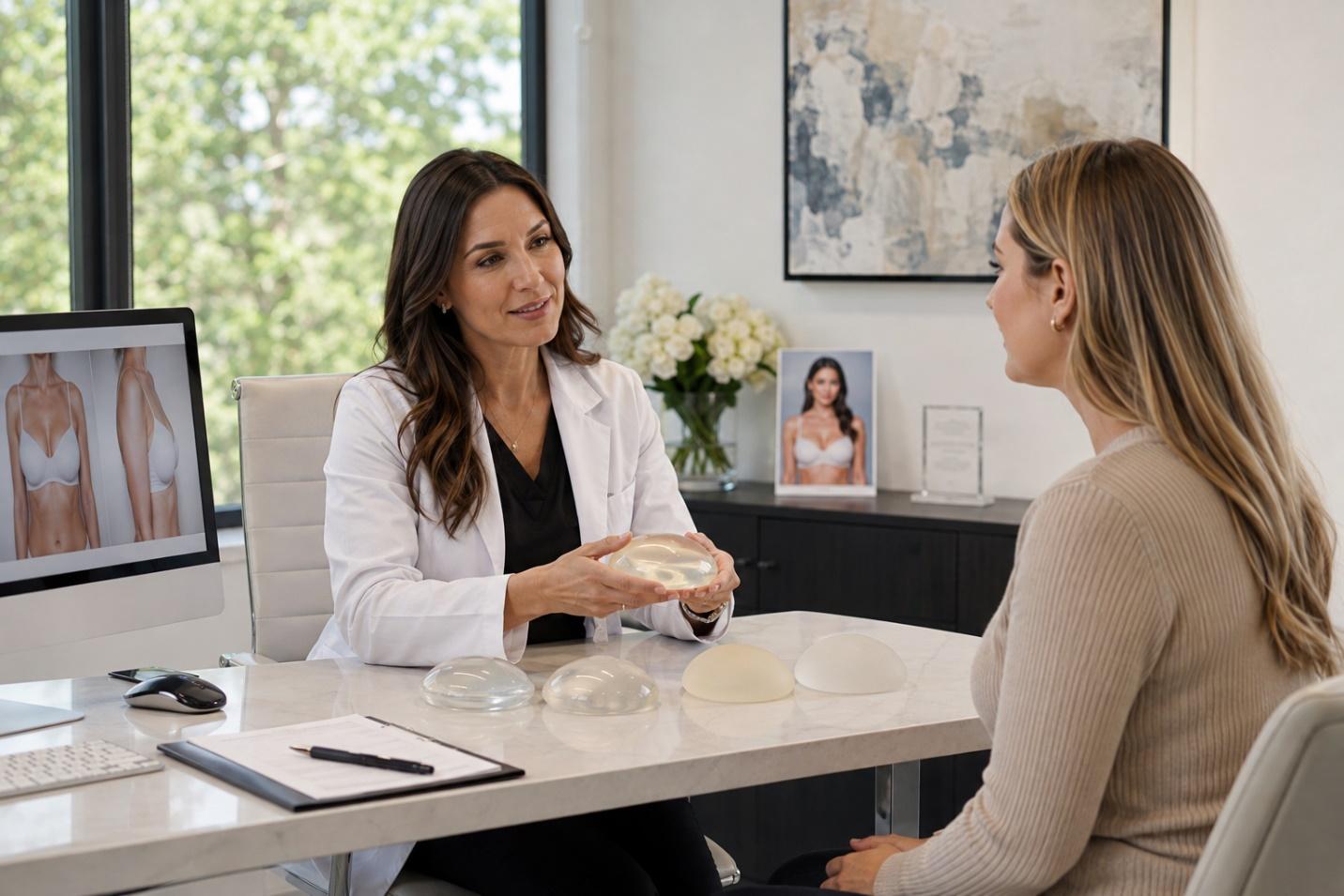
Your consultation includes a physical examination of your breast tissue, chest wall, and skin quality, along with a detailed conversation about the look you are hoping to achieve. Many practices, including Princeton Rejuvenation Institute, use implant sizers or imaging tools during consultation so you can see an approximation of different implant sizes on your own body before deciding. This is also the time to discuss whether a breast lift should be combined with augmentation if sagging is part of your concern, since an implant alone does not correct significant droop.
Breast Augmentation Recovery Timeline
Most patients take about one week off work, though physically demanding jobs may require two weeks or more. Swelling and tightness are common in the first few weeks, with most patients returning to light activity within two weeks and full exercise, including upper-body workouts, by six to eight weeks. Final results, including implants settling into a more natural position, typically become apparent by three to six months after surgery.
Combining Breast Augmentation with a Lift
Breast augmentation adds volume, but it does not lift breasts that have dropped due to aging, pregnancy, or weight changes. For patients with both volume loss and sagging, combining augmentation with a lift (mastopexy) addresses both concerns in one surgery. Your surgeon will assess your degree of sagging during consultation to determine whether a lift is necessary for the result you are hoping to achieve.
Risks and Considerations
As with any surgery, breast augmentation carries risks, including infection, changes in nipple sensation, implant rippling, and capsular contracture, a hardening of scar tissue around the implant that can occur over time. These risks vary based on implant type, placement, and individual healing, and your surgeon will walk through your specific risk profile during consultation rather than presenting a generic list. Choosing a board-certified surgeon and an accredited surgical facility meaningfully reduces, though does not eliminate, these risks.
Breast Augmentation and Mammograms: What to Know
Breast implants can make certain areas of breast tissue harder to visualize on a standard mammogram, which is why it is important to tell your imaging technician about your implants before any mammogram so they can use specialized displacement techniques designed for augmented breasts. Submuscular implant placement, beneath the chest muscle, tends to interfere less with mammogram visibility than implants placed above the muscle. This is a detail worth discussing with your surgeon during consultation if breast cancer screening history is a consideration for you.
Breast Augmentation and Future Breastfeeding
Many patients considering breast augmentation ask whether implants will affect their ability to breastfeed in the future. Certain incision locations and surgical techniques are more likely to preserve breastfeeding ability than others, and this is worth raising directly during consultation if you may want to breastfeed later, since your surgeon can factor this into incision placement and technique recommendations rather than treating every case identically.
Life After Breast Augmentation: Long-Term Care
Once you have fully healed, living with breast implants involves relatively little ongoing maintenance beyond routine breast health monitoring, including self-exams and any imaging your doctor recommends based on your age and implant type. Significant weight changes or future pregnancies can affect how your results look over time, and some patients choose revision surgery years later to replace implants or address changes in breast position, which is a normal and common part of long-term implant ownership rather than a sign that anything went wrong.
How Long Do Breast Implants Last?
Modern breast implants are not designed to last a lifetime, and most manufacturers note that some patients will need revision surgery over the years due to rupture, capsular contracture, or simply a change in aesthetic preference over time. The FDA recommends periodic monitoring of silicone implants, including MRI or ultrasound screening, since silicone ruptures are not always noticeable without imaging. This is a long-term consideration worth discussing at your initial consultation, not just a detail for later.
Choosing the Right Surgeon for Breast Augmentation
Because implant choice, incision location, and placement all involve tradeoffs specific to your anatomy, breast augmentation benefits from a surgeon who takes time to understand your goals rather than recommending a standard approach for every patient. Reviewing a surgeon's before-and-after photo gallery and asking about their specific experience with your implant type of interest are both worth doing before committing to surgery. Our guide on choosing a board-certified plastic surgeon in Princeton, NJ covers the credentials and questions worth confirming beforehand.
What Determines Your Final Implant Size Recommendation
Implant size recommendations are based on more than a patient's preference alone. Your surgeon will consider your existing breast tissue and chest wall width, skin elasticity, and how much the skin can safely stretch to accommodate a given implant size without excessive thinning over time. Two patients requesting the "same" cup size increase may end up with different implant volumes recommended, since a given implant size looks and fits differently depending on individual chest dimensions. This is why implant sizers and imaging during consultation are more useful than choosing a size based on a photo of someone else's results.
Preparing for Breast Augmentation Surgery
In the weeks before surgery, your surgeon will typically ask you to avoid certain medications and supplements that increase bleeding risk, stop smoking if applicable, and arrange for someone to drive you home and help around the house for the first few days. Having loose, front-closing tops ready, along with any prescribed compression garments, makes the first days after surgery noticeably more comfortable.
Breast Augmentation at Princeton Rejuvenation Institute
Jamie R. Wisser, MD, FACS, a board-certified plastic surgeon, guides patients through implant selection, incision and placement options, and realistic expected outcomes during a personalized consultation. Patients from Princeton, Hamilton, Hightstown, Trenton, and throughout Central New Jersey can also ask about combining augmentation with a breast lift or other procedures as part of a mommy makeover if that fits their goals.
Contact Princeton Rejuvenation Institute to schedule your breast augmentation consultation.
Category:


