

Fat Grafting in Princeton, NJ
Fat grafting in Princeton, NJ uses your own fat to add natural volume to the buttocks, hips, hands, arms, legs, breasts, and face while slimming the donor area. Fat is harvested with liposuction, purified, and carefully reinjected. At Princeton Rejuvenation Institute, board-certified plastic surgeon Dr. Jamie R. Wisser, MD, FACS tailors every plan. Book your consultation today.
What Is Body and Extremity Fat Grafting?
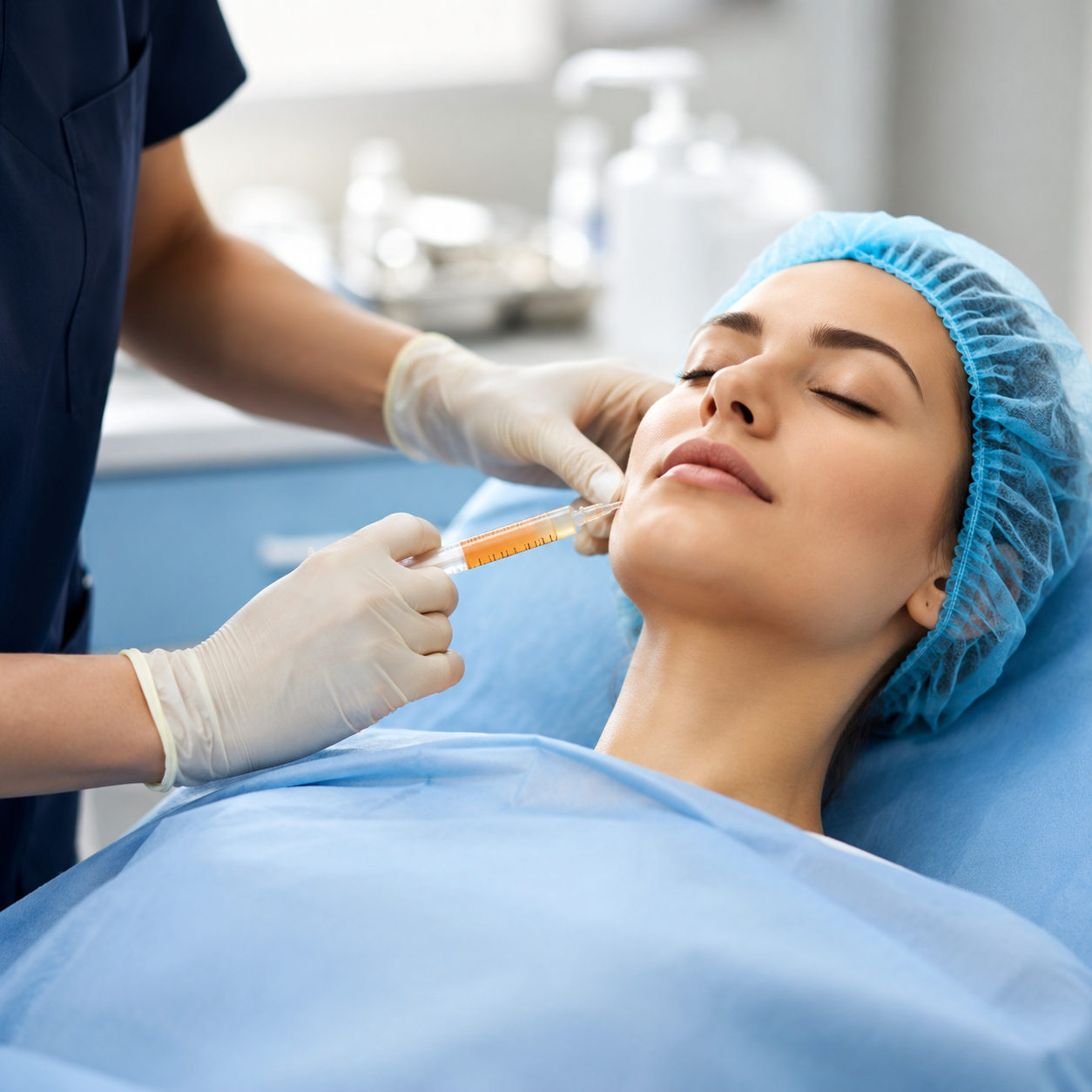
Fat grafting, also called fat transfer or micro-lipoinjection, slims a donor area and enhances a recipient area in one procedure. Your own tissue means no allergic reaction, rejection, or foreign-body response. It is one of our most versatile body contouring procedures, with patients from Princeton, East Windsor, Cranbury, and across NY.
How Does Fat Transfer Work?
- Harvesting: fat is gently removed from the abdomen, flanks, or inner thighs using tumescent liposuction through small, discreet incisions.
- Purification: a centrifuge concentrates viable fat cells, separating out oil, anesthesia fluid, and damaged cells.
- Reinjection: micro-cannulas place fat in small aliquots across multiple tissue planes to maximize survival and smoothness.
Procedures are performed at the accredited Reliant Surgical Center.
What Areas Can Fat Grafting Treat?
- Breasts: modest, natural volume, an alternative to breast augmentation
- Buttocks: shape and projection with buttock rejuvenation
- Face: youthful volume with facial fat grafting
- Hands: rejuvenation of aging, hollow hands
- Arms and legs: correction of extremity volume deficiency
- Hips: enhanced curves and proportions
How Long Do Fat Grafting Results Last?
Typically 50 to 70 percent of transferred fat establishes a blood supply and survives; the rest is resorbed over a few months. Dr. Wisser slightly overfills to account for this. Surviving fat is long-lasting with a stable weight, and a second session can add volume. Results vary by patient; see our photo gallery.
Fat Grafting vs. Implants in Princeton, NJ
Fat grafting uses biocompatible tissue, feels natural, and avoids implant risks such as capsular contracture or rupture. Implants may be better for a larger size increase; Dr. Wisser explains both at consultation.
Who Is a Good Candidate for Fat Grafting?
Good candidates are healthy non-smokers at or near a stable weight, with enough donor fat and realistic expectations about resorption.
What Is Fat Grafting Recovery Like?
- Swelling and bruising that improve over weeks
- Compression garments over donor sites
- Protecting the grafted area as it heals
- Walking soon after surgery; strenuous exercise delayed several weeks
Home post-op nursing is available through Nurse Concierge.
Why Choose Our Princeton, NJ Fat Grafting Surgeons?
Dr. Wisser is a board-certified plastic and reconstructive surgeon and Fellow of the American College of Surgeons, recognized among NY and NJ's top-rated plastic surgeons. With Matthew J. Lynch, MD, he offers full-service care, including our Rejuvenation Spa & Laser Center. Fat grafting pairs well with upper and lower limb liposculpting and a tummy tuck. Read our patient testimonials.
Schedule Your Fat Grafting Consultation in Princeton, NJ
Call 609-448-9055 or request your fat transfer consultation online. We welcome patients from Princeton, East Windsor, Cranbury, West Windsor, Plainsboro, and across NJ and NY.


